CO-FACILITATION PROJECT
*Faking It With Gravity
with Nica Portavia and Karen Nelson
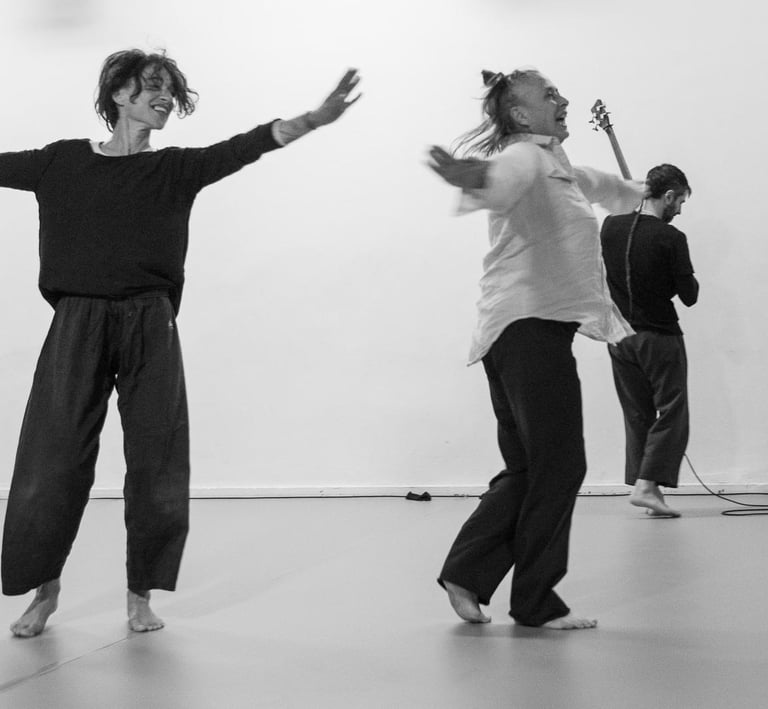
Faking it With Gravity creates a space of inquiry to explore presence in our improvisation dancing. We ask ourselves, what is presence?
How do I experience the falling part of falling? Or, the sensation of letting go into the unknown even for a brief timeless moment?
Am I still improvising in this present moment? In Contact Improvisation we dance with gravity.
That sensation, our first handshake-touch with the earth, dances us through its field for our whole lifetime. When we turn our attention to it, what happens?
This is the basis of our practice.
As co-facilitators Nica and Karen teach together, each supporting the other’s voice, as the material shifts through numerous somatic and compositional approaches to essential aspects of the touch-based partner communication style of dancing known as Contact Improvisation. Prompts for training will include the “small dance” of standing which shines awareness on aspects such as simple embodiment, the natural dance of the reflexes, and the ability of the body to balance in a constantly shifting relationship to gravity.
The intention of the workshop is embodying presence. It is to distinguish between our concept of ourselves including our goals, and our actual felt experience in dancing.
NICA PORTAVIA & KAREN NELSON .
In Faking It With Gravity we work with looking at our patterns and making choices. Previous workshop participants noted such inquiry and commentary:
• When do I know I am faking?
• Is faking bringing me into realness?
• When I fake caring for someone else safety, it quickly becomes actual caring.
• I have been faking myself (identity) all my life.
Karen Nelson and Nica Portavia met exchanging dancing and love for gravity. This meeting between different human beings and generations creates a space to dance, to hope, to remember, to fall and to be together.
Contact Improvisation is our common strategy, our vocabulary, our home.The workshop is open to all bodies, all identities. We are making efforts to create a more diverse space for practicing, we encourage queer and racially diverse identities to join this workshop.
*We thank Steve Paxton (1939-2024) for his ground breaking practice of the “small dance” (1960’s), and his instigation to collectively discover with many others the ongoing and evolving partner dance practice called Contact Improvisation (1972).
*We acknowledge Lisa Nelson for her proposal of Tuning Scores which reveal much including communication through the senses, compositional choosing, communication through action and call, and deep respect for individual experience as the part of the whole.
*MFS underlies so much of the movement discovered in CI. This body of work was articulated by Steve Paxton and points to deep anatomical inter-relationship emanating from the small dance, and beyond.
SMALLER
A GRAVITy ACTION
TOUCHING SOUND
GIVING DANCE
Performers Nica Portavia, Karen Nelson (dance)
Musicians Evan Strauss, Scott Smith, Sonny Boiardi,
This example carries the big picture. A small touch carries the vibration dance of inside life and inside music. The gift of gravity, we SMALLER performers share the inside and outside impacts of social change, the wealth. We give dance where a tangible touch can equal an intangible result. And invisible communications touch and clarify, confuse, and discover the already there. Thanks to Steve Paxton (1939-2024) for his ground breaking practice of the small dance “can it be smaller?” (SP) This revolution of body presence is a quiet, breathing one. It is an exultant, joyous and fierce one. As we do the deep, hard, personal and collective work to reclaim our bodies from a human-made sea of corporate greed, planet destruction, gender inequity and ignorance of race and religious prejudice, we have to ask, what does our art and embodiment labor bring to the social and environmental change movements? In SMALLER even as we question, we perform with the confidence that being in the room together practicing presence, we are in community action. Ultimately, we are all improvising, the performers and the observers of the performance. Gravity, the profound, constant sensation that connects us with our home, is a force we each experience whether giving attention to it or not. The earth is always here. The substance of our work hopes to materialize and illuminate that felt sense in community.
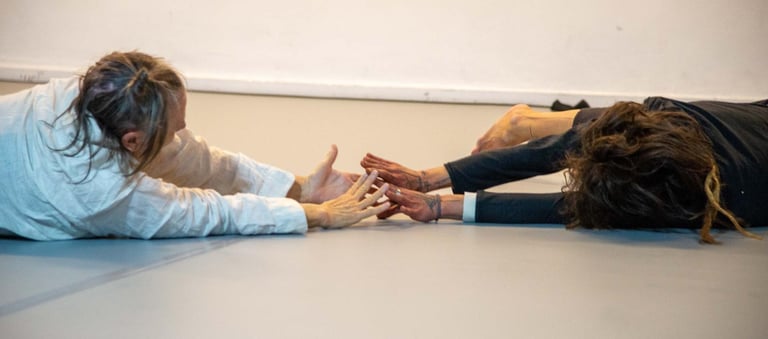
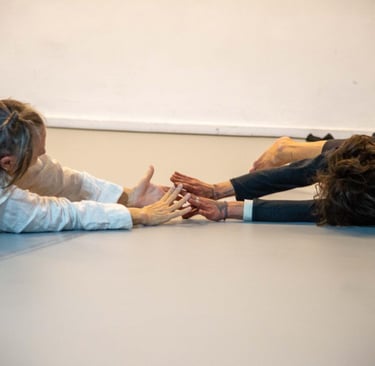
NICA PORTAVIA & CHARLIE MORRISSEY
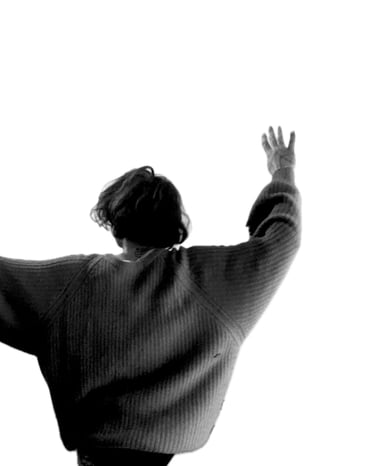
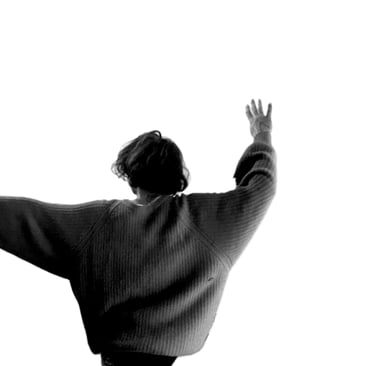
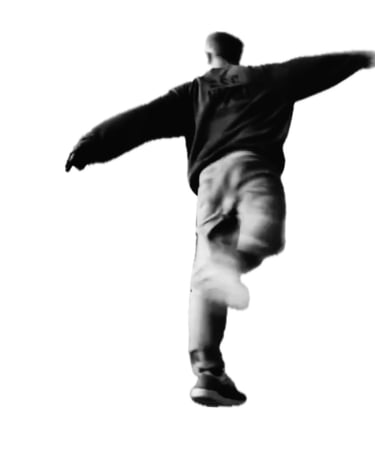
GRAVITY DANCES
This workshop is about playing with physical materials - about working with tools of perception, motion and imagination. It’s about widening our field of attention and experience. We will explore structures and extrapolations of Steve Paxton’s Material for the Spine; physical explorations/meditations/ways of engaging with connections from the spine to the peripheries of the different bodies we inhabit and are or will become.
The queer frame is about owning up to the essential queerness of dancing; its transgressive and self-generating nature. Dancing is about feeling and expression, and a constantly morphing, shifting experience of the bodies that dance it; it refuses to be defined in narrow or fixed terms and belongs to each dancer’s experience - it’s weird and messy and unruly, and can generates states of euphoria and transcendence - when we fix it in a hetero-normative frame, we are missing the opportunities that dancing offers - to generate through movement different ways of experiencing - of seeing, feeling and being.
In CI, there are added layers of direct contact; of meeting, of touch, interaction, negotiation, provocation, care, respect, play, disruption and incredible opportunities for each dancer to notice themself and the person they dance with in ways that take each beyond what they think they know and what they think they are.
Because everything is political — every weight shared, every hand released, every floor we trust again.
Dancing is a way of becoming and unbecoming, doing and undoing; over and over again, and it’s a process - one which affirms presence and builds resilience and resourcefulness in each dancer’s body.
This workshop is also a love story — with the form, and between us.
Two bodies that have been falling together for many years, still curious about what else is possible in the encounter.
We invite you into this dance — a field of gravity, resistance, tenderness, and revolt.
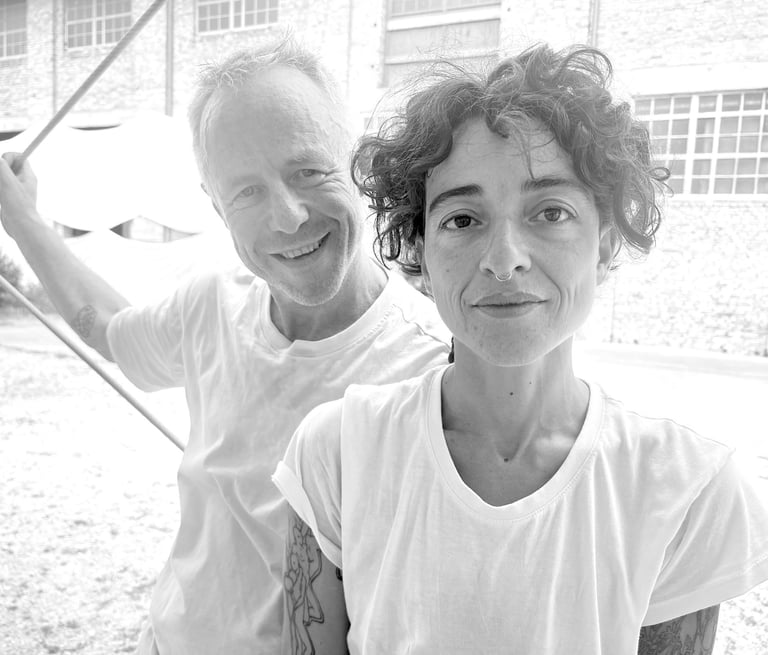
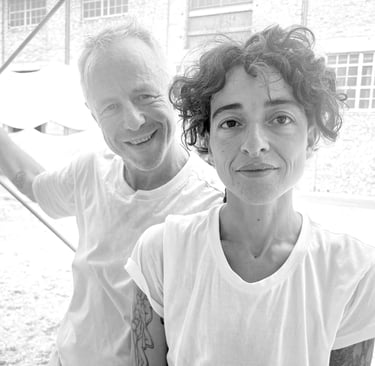
What Grows Together
Nica Portavia & Adrianna Michalska
Concept
This work proposes a practice of Contact Improvisation that engages with the metaphors of land and water to question, unsettle, and speculate the current social norms and imaginaries of how we relate to water and land in systems based on neoliberalism and capitalism systems' influence. In this work we recognise that the treatment of natural resources for centuries depended on these ideologies that sedimented the view of property, individualism, and ownership and led to overconsumption, extraction, and exploitation of both nature bodies and human bodies. We unpack how our relationships with water and land are shaped by our contexts and how, by extension, we relate to each other. To create a counter narrative, we bring in the physics, embodiment, sensations, imagination, movement, and stories to create a platform for imagining and speculating but also confronting, colliding, and exchanging. With a curiosity of speculative practices of embodying different ways of co-existing in movement, this work fosters a specific attention to the practice of Contact Improvisation. Our aim is to ask questions without seeking final resolutions and follow the directions of collective curiosities.
The Hydro line
This part of the work focuses on reimagining water-human relations. Leaning on the discourse of hydrofeminism, this work approaches water as matter and as a metaphor. Through different movement scores, this line of work highlights elements such as: radical collectivity (we cannot separate ourselves from water bodies because we are water), fluid identities (decomposing a notion of an individual and recreating an idea of being a composition of all waters, landscapes, territories, and communities that shaped us), transcorporeality and interconnectedness: bodies being continuously leaky, porous, exchanging, and changing.
The land line
LAND AND BORDERS MANIFESTO
Land
Land is not property.
This idea is colonial.
Colonialism imposed a tempo:
fast extraction, slow repair.
The demand for speed is colonial.
It leaves no time for consent, care, or regeneration.
Slowness is not inefficiency.
It is resistance to extraction.
There is no separation between exploited bodies
and exploited ecosystems.
The same system consumes both.
A system that cannot care for land
cannot care for bodies.